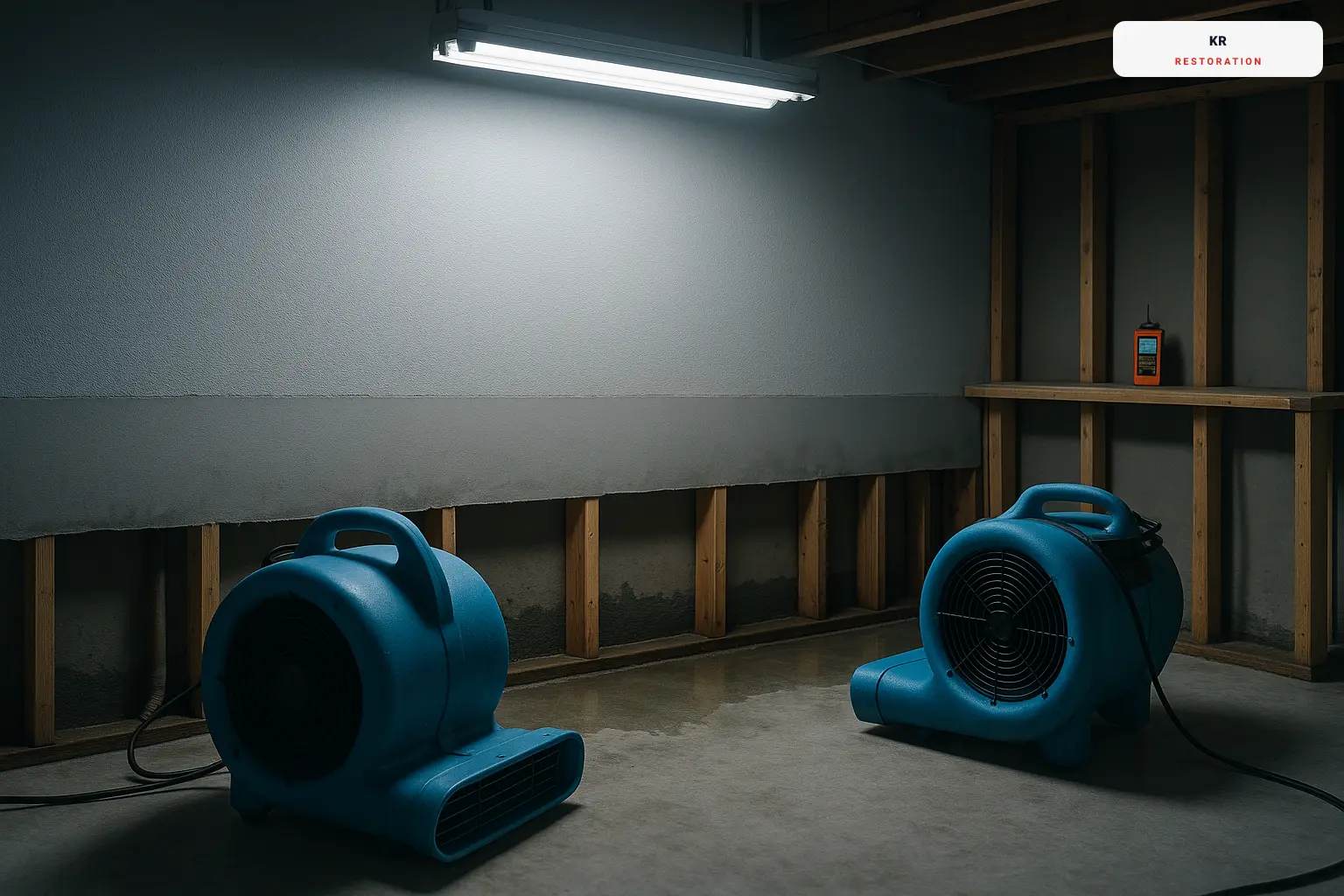
How Our Brick Township Team Handles a Howell Job
A Howell call hits our dispatch the same way every other call does — a person picks up, gets the address, gets the loss type, and starts a truck moving while we are still on the phone with you. No call center routing, no answering service. The first conversation captures access details (gate codes, building manager contact, parking constraints) so the crew arrives ready to start work, not to gather information.
On active losses (burst supply lines, sewer backups, fire and smoke calls, wind-driven water intrusion), the standard is sub-hour arrival anywhere inside our coverage radius. Howell is roughly 7 miles from where our Brick Township crew bases out of, so under normal traffic that is a 21-35 minute response. We pre-stage trucks and equipment for the seasonal surge windows specifically so individual arrival times do not slip during storm events.
The on-site discipline matters more than the equipment list. Source-control before anything else. Photo + moisture documentation before equipment goes down. Equipment sized to the actual loss, not the truck capacity. Daily monitoring with logged readings until every monitored substrate hits dry-standard. Reconstruction on the back end with the same crew, scoped from the same documented Xactimate. End-to-end accountability through one team and one contract.
Insurance documentation in Monmouth County
Most of our Howell work is insurance-billed. We document moisture readings against a building diagram, photograph every wet surface before equipment goes down, write Xactimate scopes the adjuster can settle without a callback, and bill carriers directly when authorized. The cause-of-loss narrative we write determines which policy bucket the claim lands in — homeowners (sudden + accidental), NFIP (true flood from rising water), or sewer/water backup endorsement (combined-sewer-overflow events) — so getting that documentation right at hour one is what determines whether the claim closes cleanly or drags through arbitration.